How Pilates and Aerials Keep Your Psoas Healthy
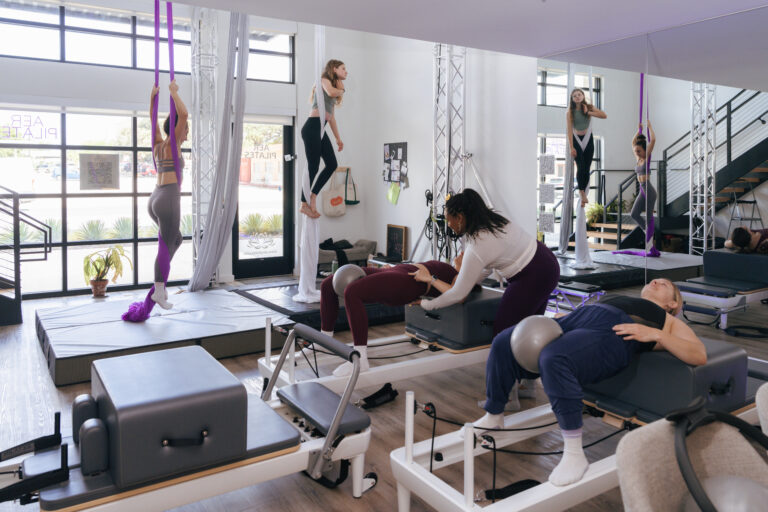
How Pilates and aerials keep your psoas healthy. Like most areas of the body, practicing Pilates and aerials with precision has the ability to bring optimal health to the psoas- the muscle that connects your upper body to your lower body. Thoracic segment T12 and lumbar segments L1-L5 all the way down the leg towards the lesser trochanter (medial surface of your thigh bone), specifically.
In my studio recently, I’ve had more than a few clients present with a significant amount of tension in their psoas/ hip flexor region. They’ve pointed to it as a source of pain and discomfort. A couple of these clients are also pregnant currently!
So we will review tips and tricks from a Pilates perspective for those with tension in the psoas during pregnancy as well.
Blog Guide
- What does the psoas do for us?
- What are some common causes of tension in the psoas?
- What does it feel like when the psoas releases?
- How do you test for psoas tension?
- How to manage psoas tightness during pregnancy?
- How does Pilates with maintaining a healthy psoas?
- Does aerial help with psoas health?
- What Pilates and aerial exercises might irritate my psoas if it feels off?
- Conclusion: How Pilates and Aerials Keep Your Psoas Healthy
What does the psoas do for us?
The psoas is referred to in literature as a key stabilizer for the back as well as the hips. This is because it attaches along your back and inserts in your thigh. So therefore it functions to help us with not only hip flexion, but spinal stability, pelvic stability and functional control from top to bottom (general posture, walking, running and everything in between).
It quite literally connects your upper body to your lower body, so keeping it healthy and happy is important!
What are some common causes of tension in the psoas?
As a Pilates instructor, my first instinct when a client comes in with any amount of tension or discomfort is to restore balance and strength the muscles surrounding the problem area.
If someone has tension in their psoas, that tells me that it’s very likely their glutes (both from the side and from behind) are not supporting their bodies the way that they should, and that they probably are deconditioned in their deep abdominals as well. And if their deep abdominals are deconditioned, it flags me to visit the pelvic floor and inner thighs as an area that might need to be investigated as well as an area that either has too much tension (hypertonic) or not enough (hypotonic).
From a postural perspective, a tight psoas encourages something called lordosis, which is an exaggerated curvature in the lumber spine that causes the pelvis to tilt forward. This posture puts a lot of pressure on the low back, causing other issues.
From a lifestyle perspective, those that spend hours and hours of time sitting can develop a tight psoas quicker than those who have more physical and upright jobs. The nature of sitting causes the psoas as a primary hip flexor to tighten and cause some pain and irritability.
What does it feel like when the psoas releases?
When your psoas releases or is in a healthy state, you’ll be able to pull the irritated leg into your chest from any position with more ease and no pain, walking will feel normal and sit to stand will be a breeze. You’ll also be able to externally rotate that thigh (turn it out) with no issues.
How do you test for psoas tension?
The Thomas Test is a reliable clinical test for your psoas. To do it you lay on your back along a bed or a table, pull the knee into your chest that has no issues and let the side that’s causing you pain lengthen away from you. If your leg can lay flat on the table or bed without hiking up or rolling to the side, you have a normal functioning psoas. If your leg hikes up, your psoas has some tension. If your leg goes to the side, it indicates your ITB (Iliotibial band) has some tension.
How to manage psoas tightness during pregnancy?
The unfortunate thing about being pregnant and having a tight psoas is that going into try to release it through a more traditional means is contraindicated and not advised in order to keep your baby safe! Your psoas runs along your uterus, so jabbing your fingers into your hips, especially once you get to a certain point in your pregnancy (end of second trimester, and during your third trimester) is not advised or something you should do.
The fact that your body naturally tilts into a hyperlordodic (extra sway back) state presents psoas tension in pregnant women too. The position of your baby may also at times cause tension in your psoas.
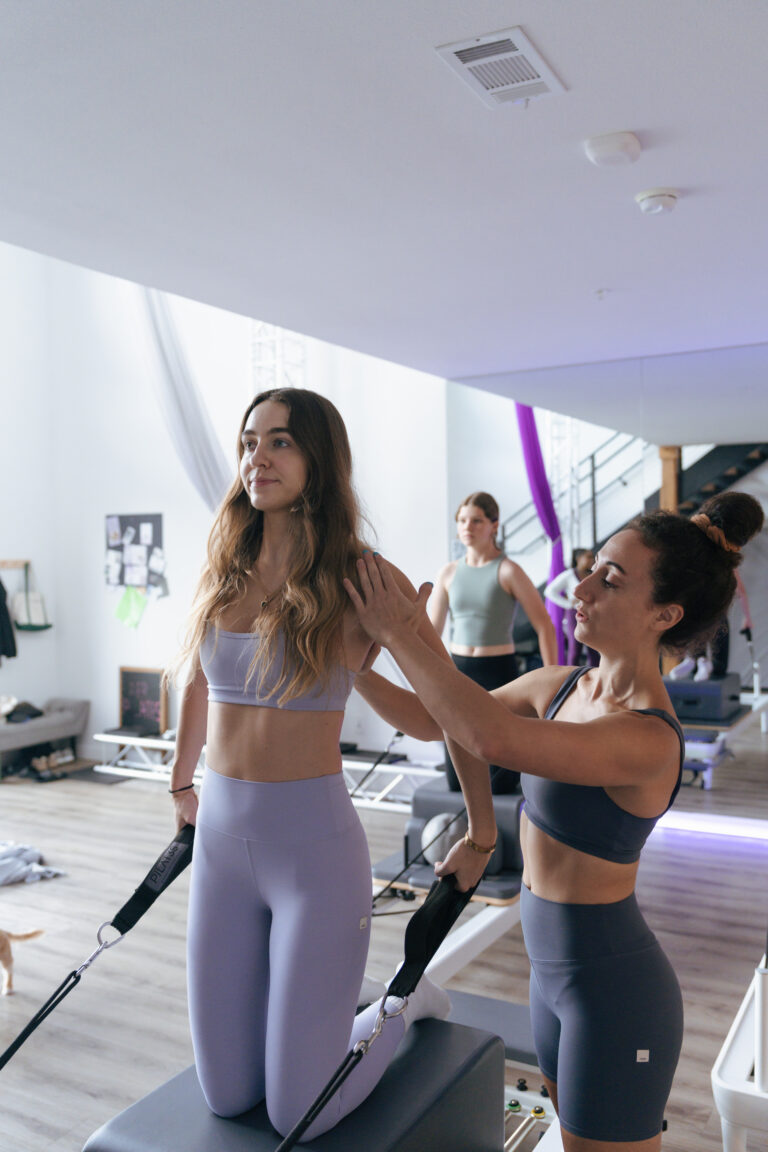
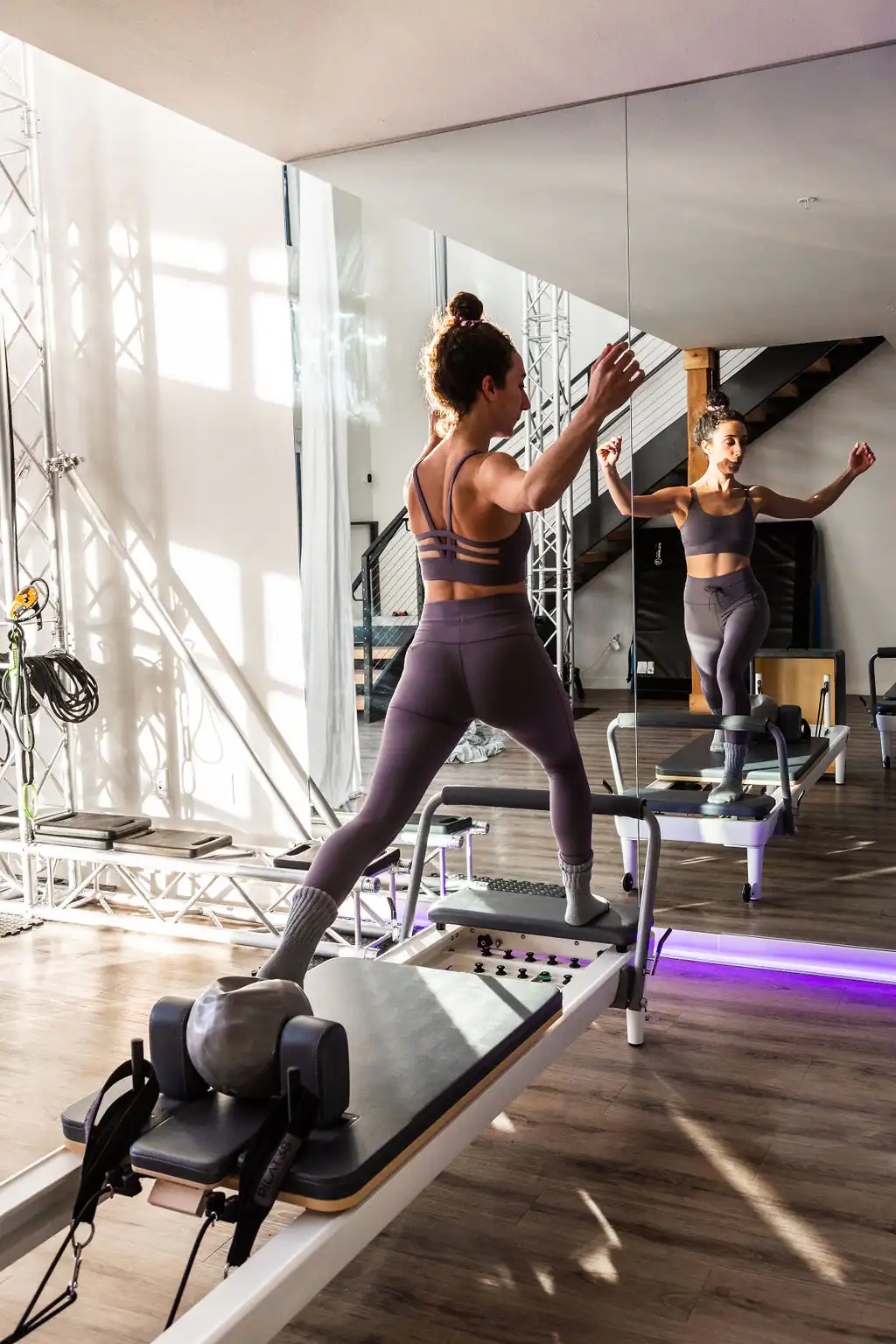
The way I have helped my pregnant clients experience tension in their psoas during pregancy is by loading into and strengthening all the muscles in the SIJ , or sacroiliac joint, aka your pelvis, and getting them into a traditional supported lunge on the reformer to open their hip flexors to provide relief.
The stronger their glutes are, the more they will be able to offload some of that tension and put it behind them instead of carry it all in front of them.
Working with women in a quadruped 4 point kneeling position is also very key for pregnant women. With the knees at an obtuse angle behind them (rather than directly underneath the hip sockets). A 90 degree angle like this might inflame the psoas further.
Not only does it help them strengthen their glute max and SIJ stability, but it also helps them fire their deeper spinal stabilizers to help them with their greater deep abdominal control as their ribs grow out to make space for their babies.
How does Pilates with maintaining a healthy psoas?
As you can probably guess after reading all of this, Pilates helps to restore balance and strength to both your deep abdominals as well as your hips so that the psoas remains in good health and does its job without over recruitment of the psoas.
Regular Pilates (a practice of 2x a week or more) should be seen as your maintenance system so that your body remains in a healthy strength and balance to accomplish the things you ask for it to do.
Working with a specialized instructor or group of instructors is important to ensuring you aren’t doing exercises that will further exacerbate inflammation and pain in your psoas and other areas that might be out of balance when you come to the studio.
Does aerial help with psoas health?
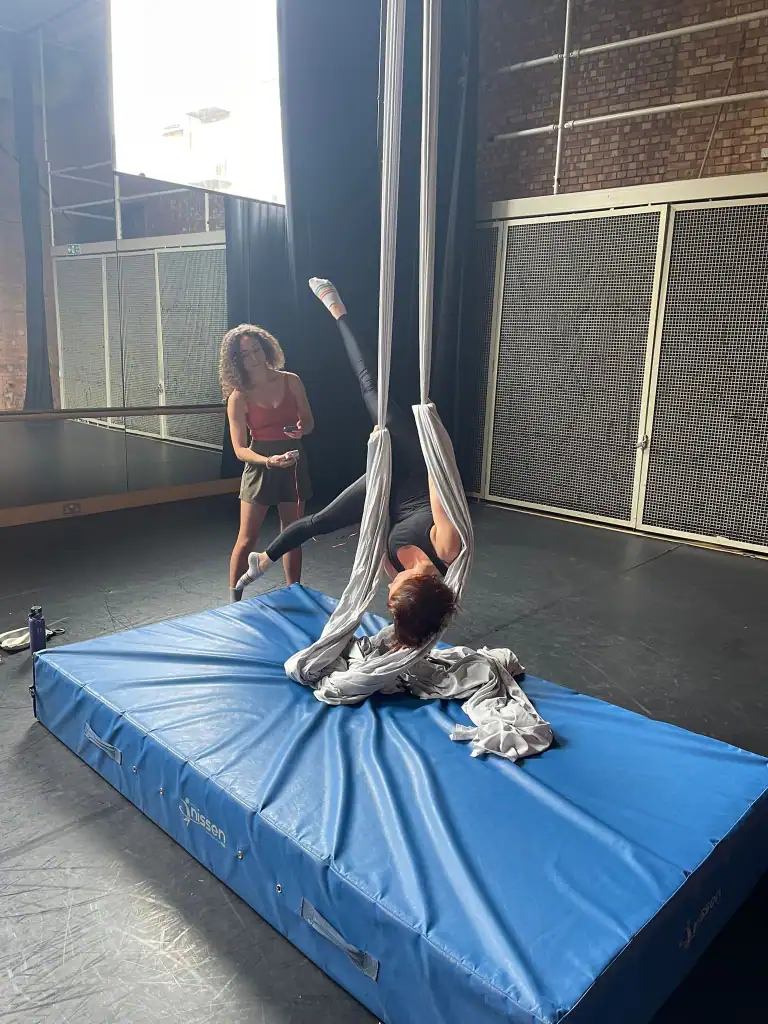
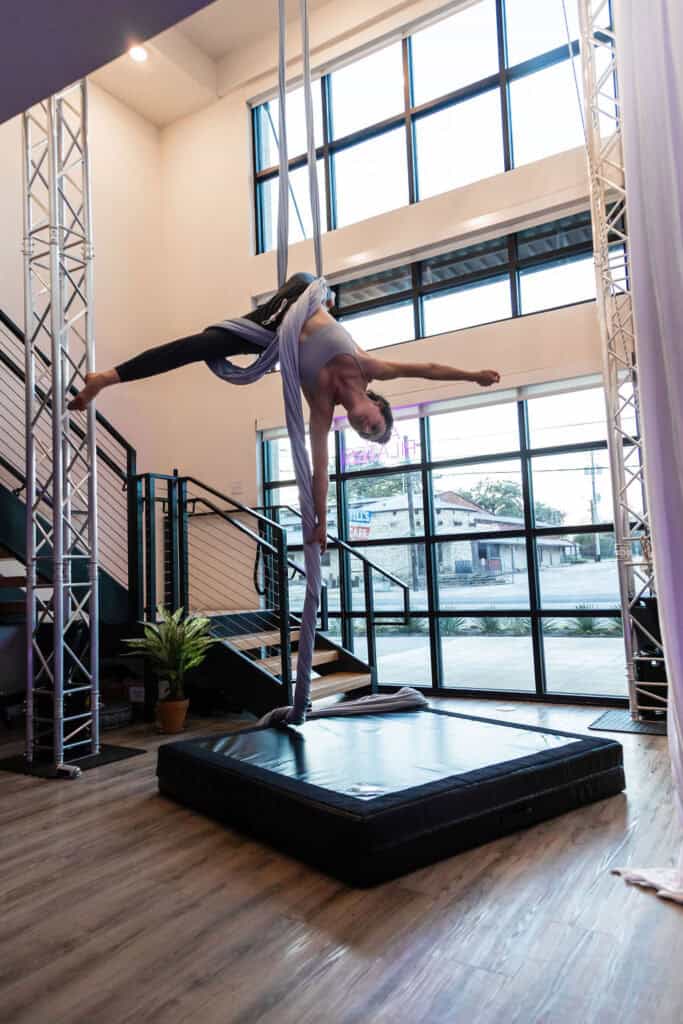
I am one of the few researchers and practitioners who has researched aerial and its benefits to the body. From my personal experience and experience as an instructor, I have noticed that aerial fitness tends to help traction the hip flexors (psoas included) which is a benefit to providing mobility to your hips and offloading them with antigravity and inverted exercises.
To maintain healthy psoas muscles on either side of your hips I advise climbing and doing sequences on the other side to balance assymetrical tension that might come from only training your “good side.”
What Pilates and aerial exercises might irritate my psoas if it feels off?
Since the psoas is a hip flexor and external rotator of the hip, it might feel aggravated during extreme hip flexion exercises and some exercises that involve external rotation.
The psoas is considered a “weak” external rotator, so if your primary external rotators are weak (deep glutes and outer hips), then you might feel an ache in your psoas when you attempt a side lying variation (hopefully not!)
In Pilates, exercises like single and double leg stretch on the mat / reformer should be avoided. Putting the footbar too high should also be avoided for different leg press exercises.
In aerial, repetitive inversions with your legs balled into your chest might aggrevate your psoas too, so inverting with a straddle split is a better idea.
Conclusion: How Pilates and Aerials Keep Your Psoas Healthy
The deep abdominal and pelvic strength building aspects of Pilates and the tractioning, antigravity benefits of aerials provide a unique way to both stabilize, mobilize and aerate the body as a whole, especially your hips and psoas. Being cautious to not choose exercises that will provide further inflammation and irritation to your psoas is important.
-
Why Your Pilates Routine Matters Even More During the Holidays: How to Stay Consistent, and a 15 Minute Pilates Mat Flow
Pilates During the Holidays: Between travel, family gatherings, shifting schedules, and the emotional marathon of the holiday season, it’s easy for your Pilates routine to slide to the bottom of your list. But this is exactly when your practice becomes even more important. Research consistently shows that Pilates supports mental health, reduces physical tension, and…
-
Pilates for Aerialists: My Research from London
2024 was an exciting and challenging year for so many reasons! One of these reasons points to the original EMG (electromyography) research I conducted on the effect of Pilates on deep abdominal recruitment in circus artists. After spending months recruiting aerialists from different corners of the UK, 8 professional and recreational aerialists and acrobats joined…
-
Pilates for Pelvic Floor Health
It is to my delight that talking about your pelvic floor health is becoming more popular in really any setting. Even though we can’t physically see our pelvic floors, it holds so much importance from functional strength, to urinary and fecal health, sexual health and more! Having a deeper and more connected understanding on the…